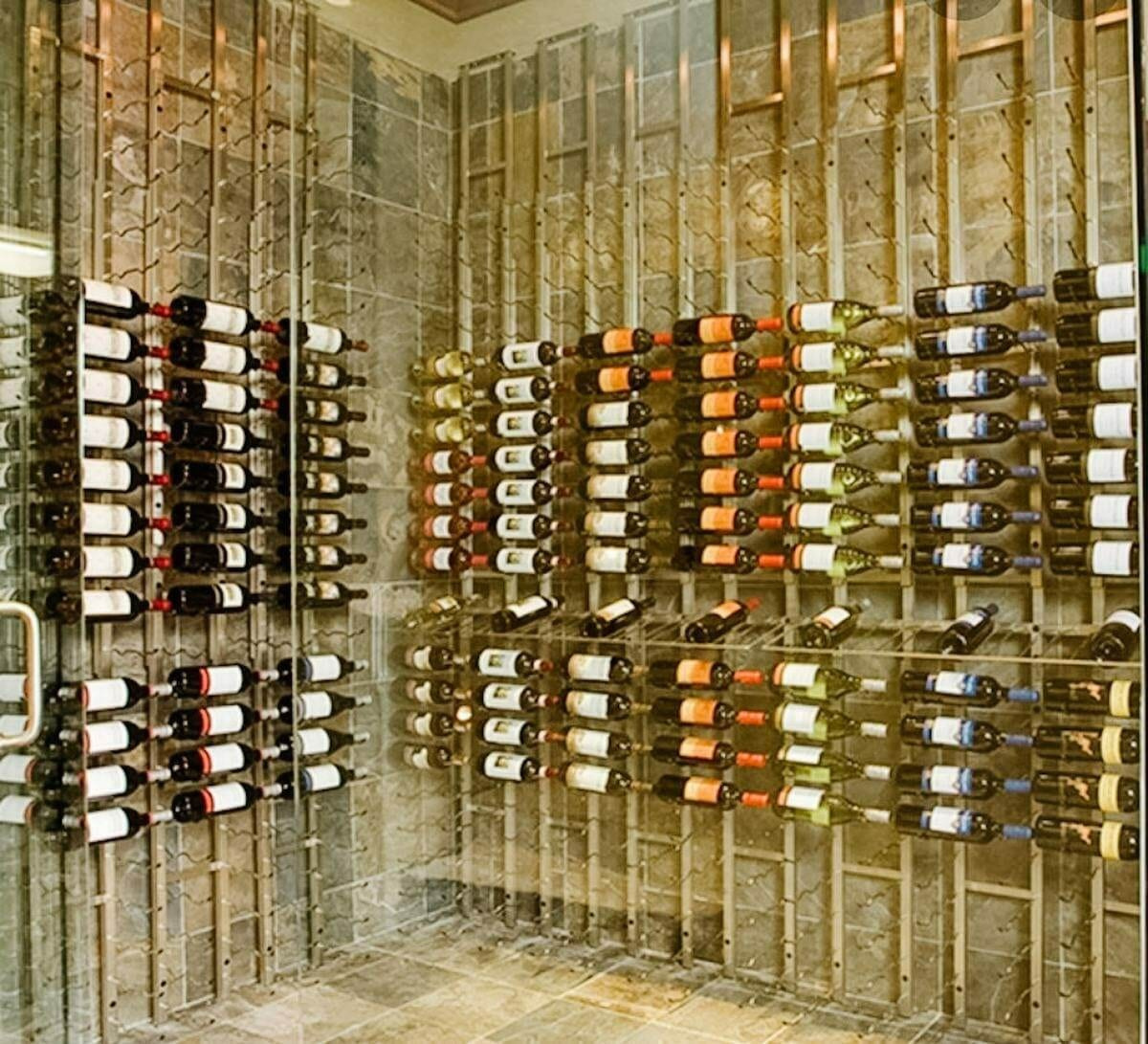
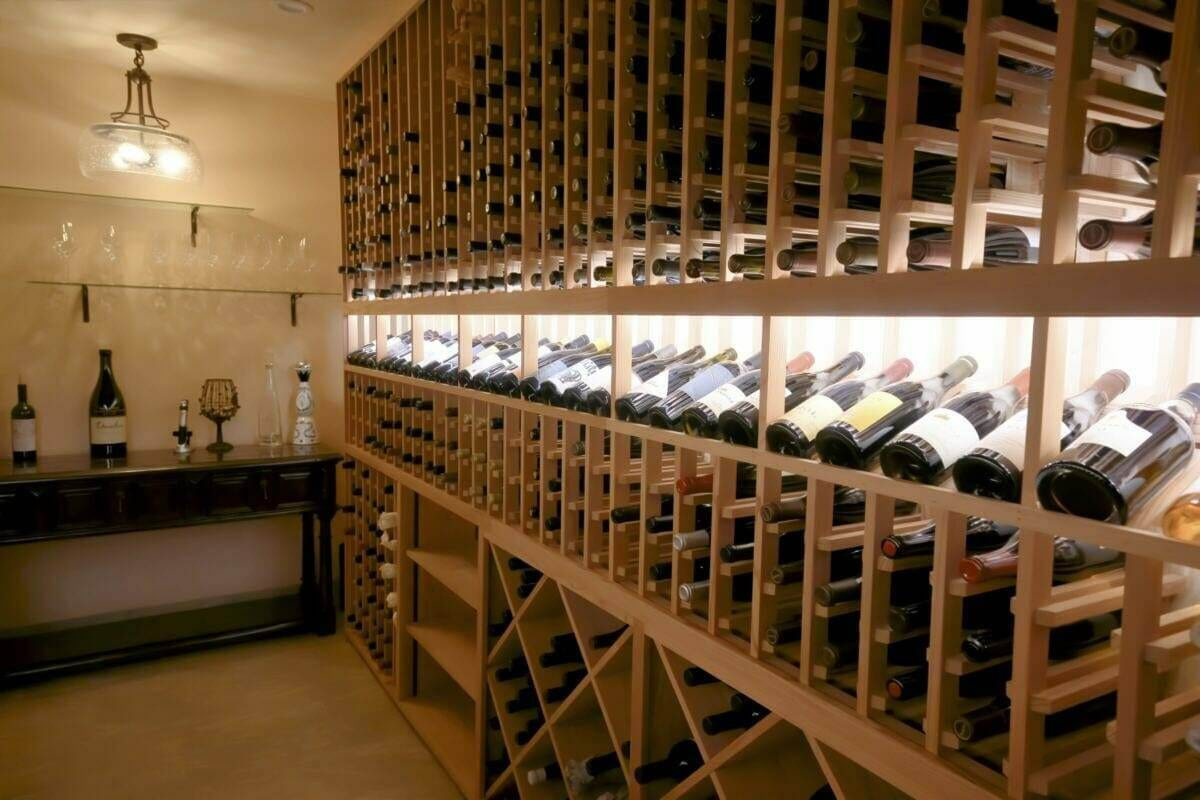
Wine Rack Dimensions & Bottle Clearance Guide
Wine rack dimensions are useful only when they describe bottles in place and a person reaching for them. Before ordering, check the rack frame, the loaded footprint, the bottle opening and the clearance needed for retrieval. Wine Hardware can help compare…
- 10 min read
- By Wine Hardware
- Updated

Wine rack dimensions are useful only when they describe bottles in place and a person reaching for them. Before ordering, check the rack frame, the loaded footprint, the bottle opening and the clearance needed for retrieval. Wine Hardware can help compare those measurements with your collection and room. Bring actual bottle examples and a simple sketch so a quoted capacity becomes a layout you can use comfortably every day.
Record four different sets of measurements
Separate the product’s overall dimensions from its bottle openings, loaded projection and operating clearance. Width, height and depth describe the frame, but they may not fully describe the space occupied by bottle necks or the movement needed to lift a bottle out. Keep each measurement labeled on your sketch.
Use the manufacturer’s current drawing for the exact model and configuration. A product photograph cannot establish scale, and dimensions for one depth or version may not apply to another. If a retailer lists a single capacity figure, ask what arrangement it represents. A useful dimension sheet makes the assumptions visible before you compare products.
Measure the collection instead of an average bottle
Gather the formats you actually buy. Note the length and widest diameter, along with unusual shoulders or shapes. Sparkling-wine bottles, taller whites and larger formats deserve deliberate positions in the plan. Bottles containing the same amount of wine can still need different support spacing and clearance.
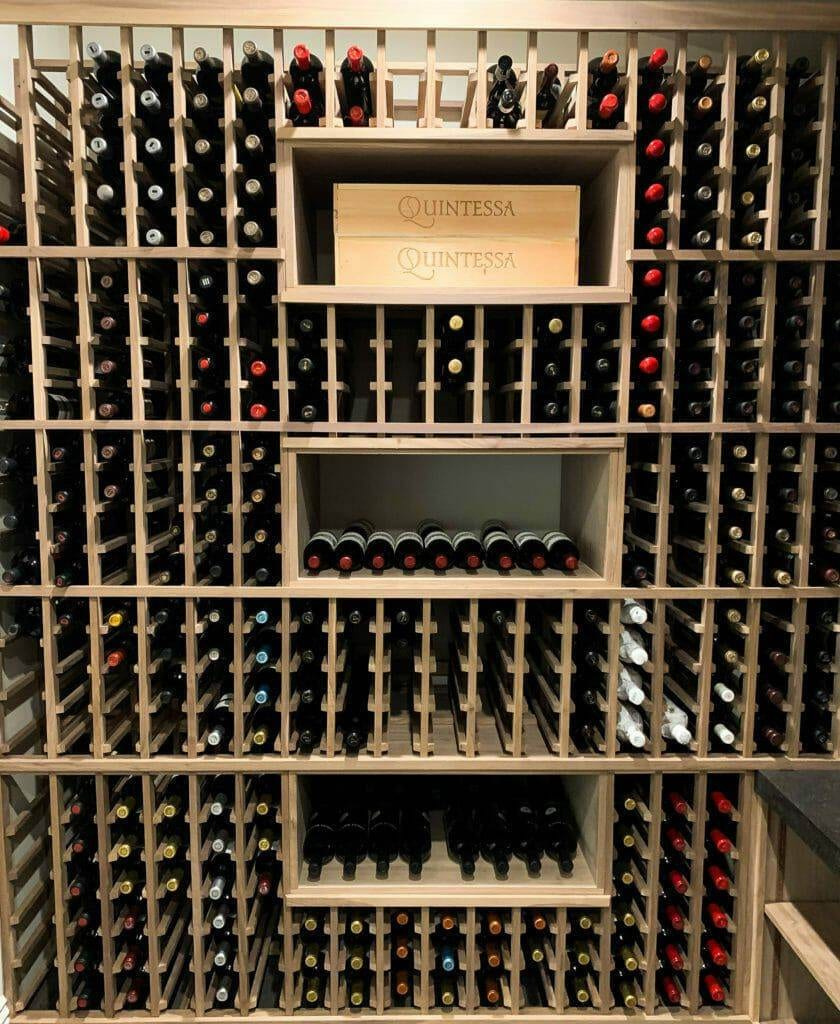
Check entry and removal as well as the resting position. A bottle should not have to scrape past the adjacent bottle to leave its slot. For supports that contact the neck and body separately, confirm their placement for the intended format. Do not modify the manufacturer’s spacing to fit a drawing without checking that the product remains suitable.

Measure a wall after subtracting its obstructions
Record the available width at the relevant heights and note baseboards, trim, switches, outlets and changes in the wall. Include nearby doors in their open positions. If the rack approaches a ceiling slope or corner, take enough measurements to show the shape rather than one maximum height.
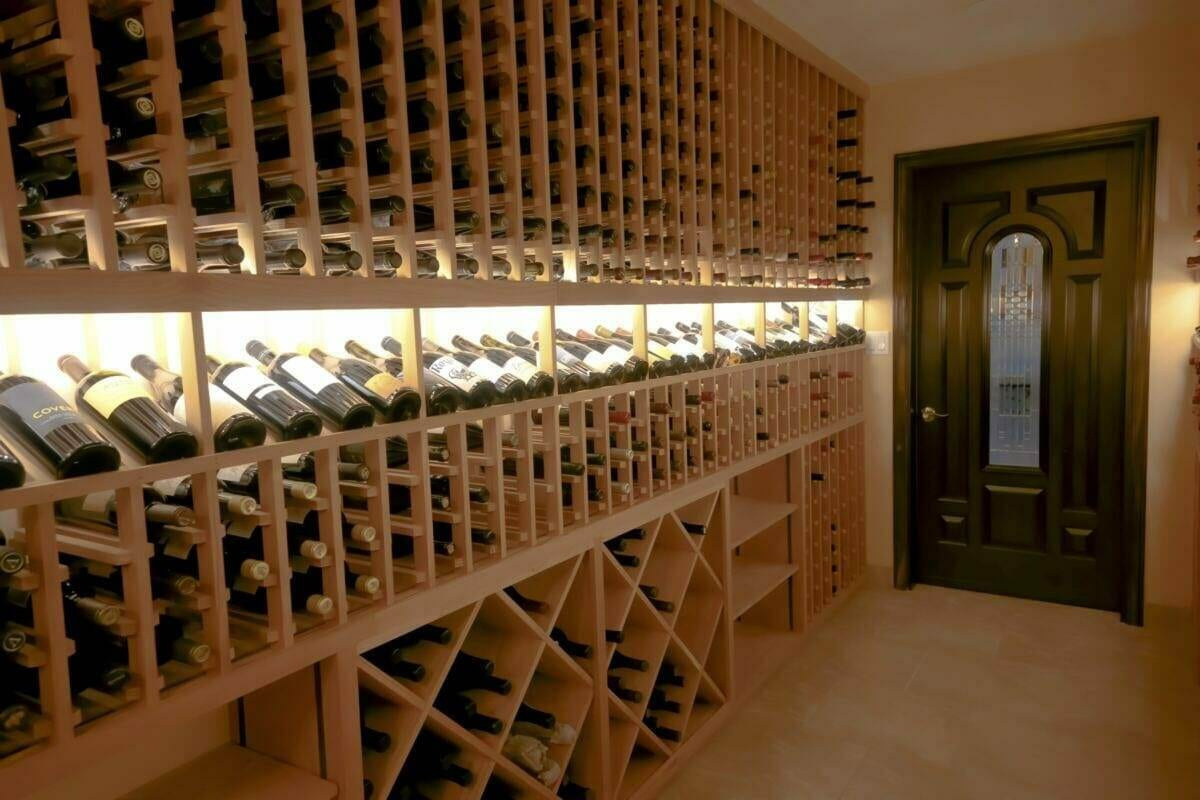
Photograph the whole wall and each obstruction with a clear reference to the sketch. Have the mounting surface confirmed separately; surface measurements do not establish attachment suitability. For a custom layout, these details help explain where standard modules might work and where a different arrangement is needed. For a kit, they help prevent a nominal fit from failing on the trim.
Check countertop and floor positions in use
For a countertop rack, consider usable surface space, upper cabinets and where a bottle can be placed while opening it. Check the loaded rack’s stability and use requirements in the product instructions. Keep the serving sequence in view rather than placing a rack wherever an empty frame happens to fit.
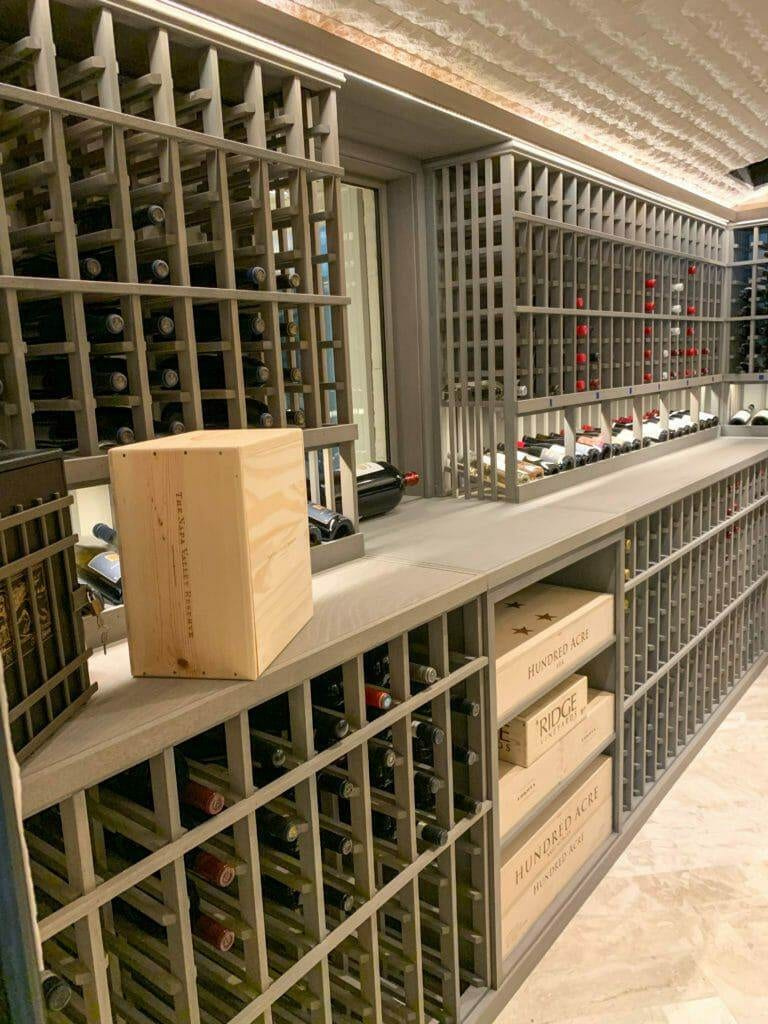
For floor storage, mark the footprint with removable tape and walk around it. Include loaded bottle projection, nearby furniture and access to the lowest positions. If the arrangement may grow, mark the final planned footprint as well. This simple room test reveals whether a deeper or wider configuration would interfere with circulation before you order the additional modules.

Review capacity and access on the same drawing
Assign your bottle types to positions on the rack elevation. Put regular selections where they are easy to identify and reach. Consider how you will access deeper rows and whether repeated wines should stay together. A high storage count is less useful when finding a bottle requires moving several unrelated wines.
Include any future purchases as named sections or compatible expansion areas. In a cooled room, show equipment clearances and service access with the racks in place. Do not let a capacity target erase space needed to operate the cellar. Rack dimensions support the storage plan; the cooling and enclosure assessment remains a separate, coordinated part of the project.
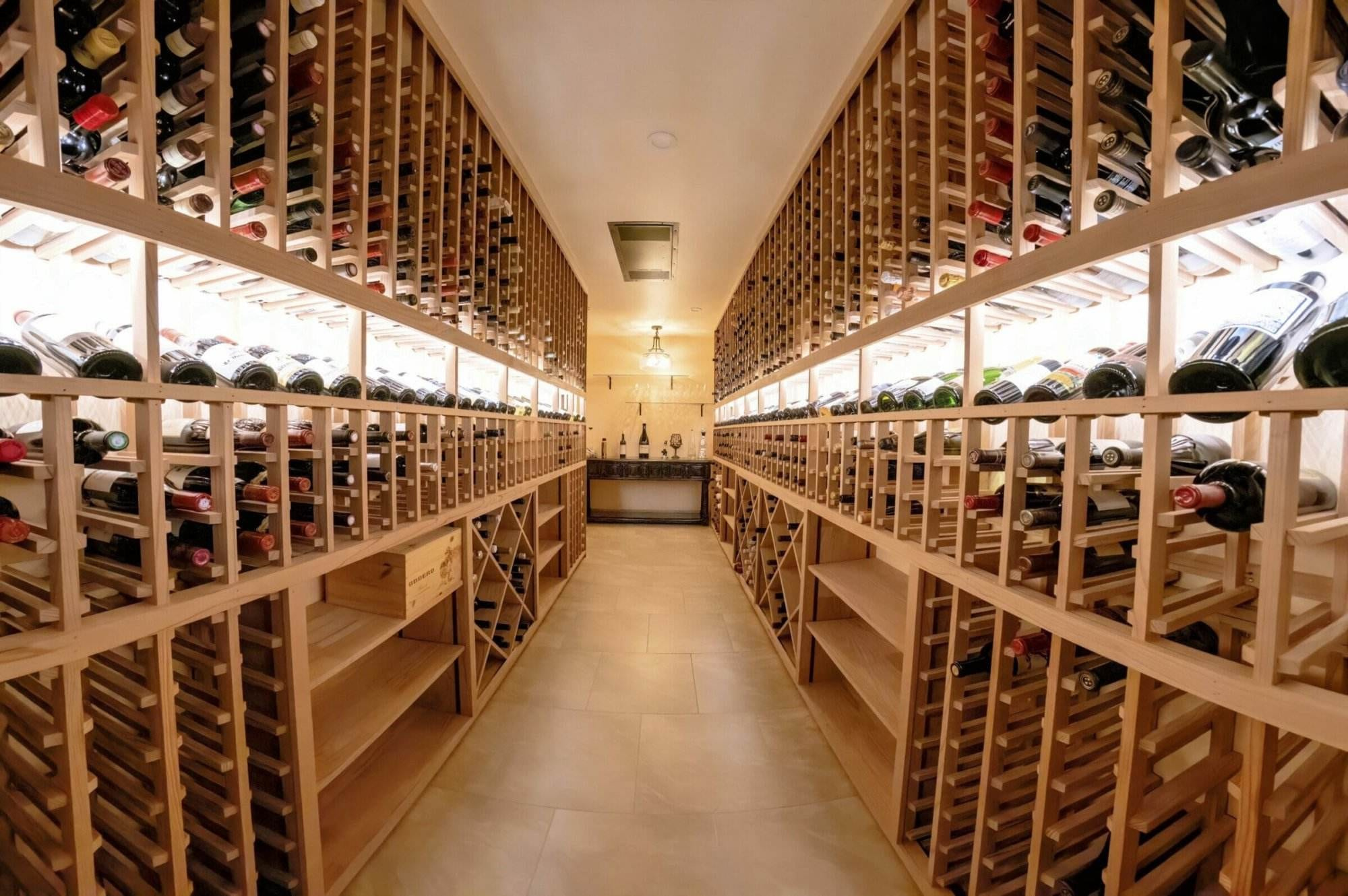
Turn measurements into a final fit review
Bring the sketch, photos, bottle measurements and selected product drawings to Wine Hardware in Walnut Creek. We carry VintageView, Modularack and designer kits and can discuss a custom approach where the collection or room needs one. Ask which dimensions are confirmed and which require a site check before purchase.
Before ordering, record the final model, quantity, configuration and finish. Confirm supplied components, mounting responsibilities and delivery arrangements. If an assembled element must travel through the home, measure that route too. Keep the approved layout for installation and future additions so a later order begins with known measurements rather than reconstructing the original decision.
Questions before you decide
What is the standard opening for a wine bottle?
There is no single opening that should be assumed suitable for every rack and bottle. Use the selected product’s specifications and measure representative bottles, particularly broad shapes, tall bottles and larger formats.
Does listed rack depth include the bottle neck?
Check the product drawing or ask the supplier. Frame depth and loaded depth may differ. Record the complete projection and the retrieval movement before comparing the rack with the available room.
Should I measure the wall myself?
Owner measurements and photos are useful for beginning the discussion. Final dimensions and attachment conditions may still require verification by the responsible designer or installer. Clearly label preliminary measurements so they are not mistaken for a completed site survey.
Bring your wine rack dimensions to Wine Hardware. Visit our Walnut Creek showroom or call (925) 944-1084 for a fit conversation before you order.
More on wine rack dimensions and bottle clearance
Wine Rack Height & Depth in Walnut Creek
From the Wine Hardware article published 2025-04-02.
Rack height and depth decide more than how many bottles fit against a wall. They determine what you can reach, how bottles project into the room and whether larger formats have a proper place. For a Walnut Creek project, start with the loaded rack and the people using it. Wine Hardware can help compare dimensions with your actual collection before a layout becomes a purchase or a custom drawing.
Measure bottles in the positions they will occupy
Gather a representative selection: the shape you buy most, a broad sparkling-wine bottle, a tall bottle and any larger formats. Measure the dimensions relevant to the proposed supports. A common liquid volume does not mean every bottle has the same width, length or shoulder profile.
Ask how the rack supports the bottle and where the widest point passes during removal. A bottle can sit in an opening yet be awkward to lift out without brushing its neighbor. For label-forward displays, confirm both support spacing and the overall bottle projection. Bring these measurements to the showroom so a rack’s stated capacity is considered alongside actual fit.
Separate rack depth from loaded depth
The depth of an empty frame may not describe the space needed when wine is stored in it. Draw the loaded outline, including projecting necks, and add the movement required to retrieve a bottle. Check the result against doors, an opposing rack, furniture and the area where a person stands.
In a narrow cellar or a room that also serves another purpose, mark the outline on the floor. Walk through the intended task while imagining bottles in place. This is a useful way to compare shallower display arrangements with deeper storage before selecting a finish. An extra row of capacity has a cost if it makes the room difficult to use.

Choose height around comfortable access
Identify who regularly selects bottles and which positions they can use comfortably. Put frequent choices in that accessible band. Upper storage should have a deliberate purpose and a suitable access plan, not simply fill the wall because space exists above the preferred reach.
Check the lower positions too. Consider bending, the ability to see a label and the space to set a bottle down. If the design includes a work surface, show how it changes storage above and below. A continuous rack elevation can look orderly while hiding awkward daily movements; review it as a person using the room, not only as a composition on paper.
Treat deeper storage as a different retrieval system
A deeper rack can group more bottles into a section, but you need a way to know what is behind the front row. Consider keeping the same wine together, assigning location labels or maintaining a simple inventory. If you buy mostly individual bottles, easy identification may matter more than density.
Do not assume every collection benefits from the deepest available configuration. Compare how you would remove a rear bottle and where the front bottle would go during that task. Ask whether the exact rack accepts the planned depth and what mounting or support requirements change. Capacity should follow a workable retrieval method rather than becoming the only measure of success.

Coordinate dimensions with the room and attachment
Include baseboards, outlets, switches, ceiling changes and cooling equipment on the rack drawing. Keep required equipment clearances and service routes available. In a cooled cellar, racks and bottles must be considered alongside the enclosure and the unit’s installation requirements; dimensions alone do not provide climate control.
Have the mounting surface and attachment method reviewed for the selected system and configuration. A taller or deeper display should not be improvised by extending a smaller one without manufacturer guidance. Wine Hardware carries VintageView, Modularack and designer kits, and can discuss a custom approach where the room or bottle mix calls for dimensions that standard modules do not resolve.
Review a bottle map before the final order
Put your collection list beside the proposed elevation. Assign ordinary bottles, sparkling wine, larger formats and future purchases to actual positions. Then check whether the most-used wines are accessible and whether display positions still leave enough practical storage. This prevents unusual bottles from becoming a problem discovered only after installation.
Before ordering, confirm the final dimensions, quantity of modules, finish, included parts and installation responsibilities. Ask about freight for large orders and measure the delivery route where assembled elements are involved. Bring the plan to Wine Hardware at 1617 Locust St, Walnut Creek, while it is still easy to compare another height or depth.

Questions before you decide
Is there one standard depth for all wine racks?
No. Depth depends on the rack design, bottle orientation, number of rows and intended bottle shapes. Check the exact product drawing and loaded footprint rather than applying one dimension to every storage system.
Does a taller rack preserve wine better?
Height is primarily a layout and access choice. Wine storage conditions depend on the environment and suitable equipment where needed. Choose height for usable storage and review the room’s climate separately.
How do I plan for large bottles?
Measure examples and assign them deliberate positions in the drawing. Confirm that the selected supports and openings accommodate those formats. Do not count every advertised bottle position as suitable for a magnum or broad sparkling-wine bottle.
Ask Wine Hardware to review rack height and depth. Bring your Walnut Creek room measurements and bottle examples, or call (925) 944-1084.

Behind the advice
Bring the article. Talk it through with Mike.
How would this work in your room? Bring Mike the article and your dimensions at 1617 Locust St, Walnut Creek. You can compare racking, cabinets and cooling choices around the wine you want to store.
Cooling sized, not guessed
We work out the heat load for your room before recommending a unit.
Racking you can touch first
Wood, metal and display racking standing in the showroom, not in a PDF.
Support after the install
For a product question or replacement, call Mike with the model number and what you need help with.
1617 Locust St, Walnut Creek, CA 94596 · Mon–Fri 9:30–5:30
Questions people ask about this
What is the standard opening for a wine bottle?
Does listed rack depth include the bottle neck?
Should I measure the wall myself?
Is there one standard depth for all wine racks?
Does a taller rack preserve wine better?
How do I plan for large bottles?
Your cellar
Put your room into the conversation.
Which part of the article fits what you have in mind? Have a photo, dimensions and bottle count ready, then call Mike to compare the layout and cooling options. This beta form does not email the store.
Call Mike at (925) 944-1084 during showroom hours to work through the details.
Work through your cellar plans with Mike: (925) 944-1084
Keep reading
Next in the cellar
Articles our customers open after this one.

Wine Racks
Expandable Wine Racks for San Ramon Homes
July 8, 2025 · 5 min read
A growing collection needs an expansion plan before it needs another rack. For San Ramon homes, stackable wine racks can organize bottles in stages…

Wine Racks
Cooling Small Wine Closets
June 24, 2025 · 9 min read
Cooling a small wine closet still requires a room assessment. Record the enclosure, door, adjacent space and possible equipment locations, then…

Latest News
Wine Cellar Insurance & Collection Documentation
April 28, 2026 · 3 min read
A clear collection record makes a wine cellar insurance conversation more useful. Gather bottle inventories, photographs, equipment details and…
Start here
Ready to stop reading and start measuring?
Take a photo and a few measurements, then call Mike at (925) 944-1084. He can help you connect the ideas here to your room, collection and equipment choices.