Choose a wine rack by following the bottle from arrival to the moment you open it. Where will it live, how will you find it and will its shape fit the supports? Once those questions are answered, material and display style become easier to compare. Wine Hardware carries rack kits and plans custom cellars, helping you connect the collection, the room and the installation before you settle on a design.
Choose the location for the wine you intend to keep
Decide whether the rack is for a small selection you use regularly, the main collection or a display within an existing cellar. Consider the room's conditions and light exposure before choosing an attractive wall. Racks organize bottles; they do not add cooling to an ordinary room.
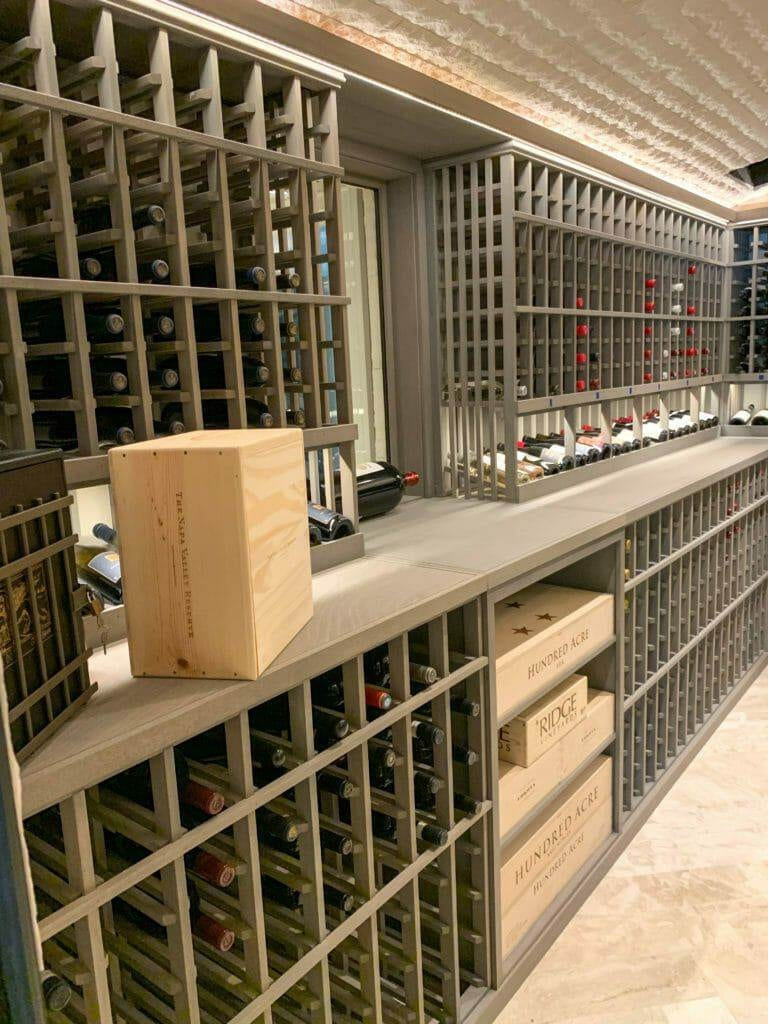
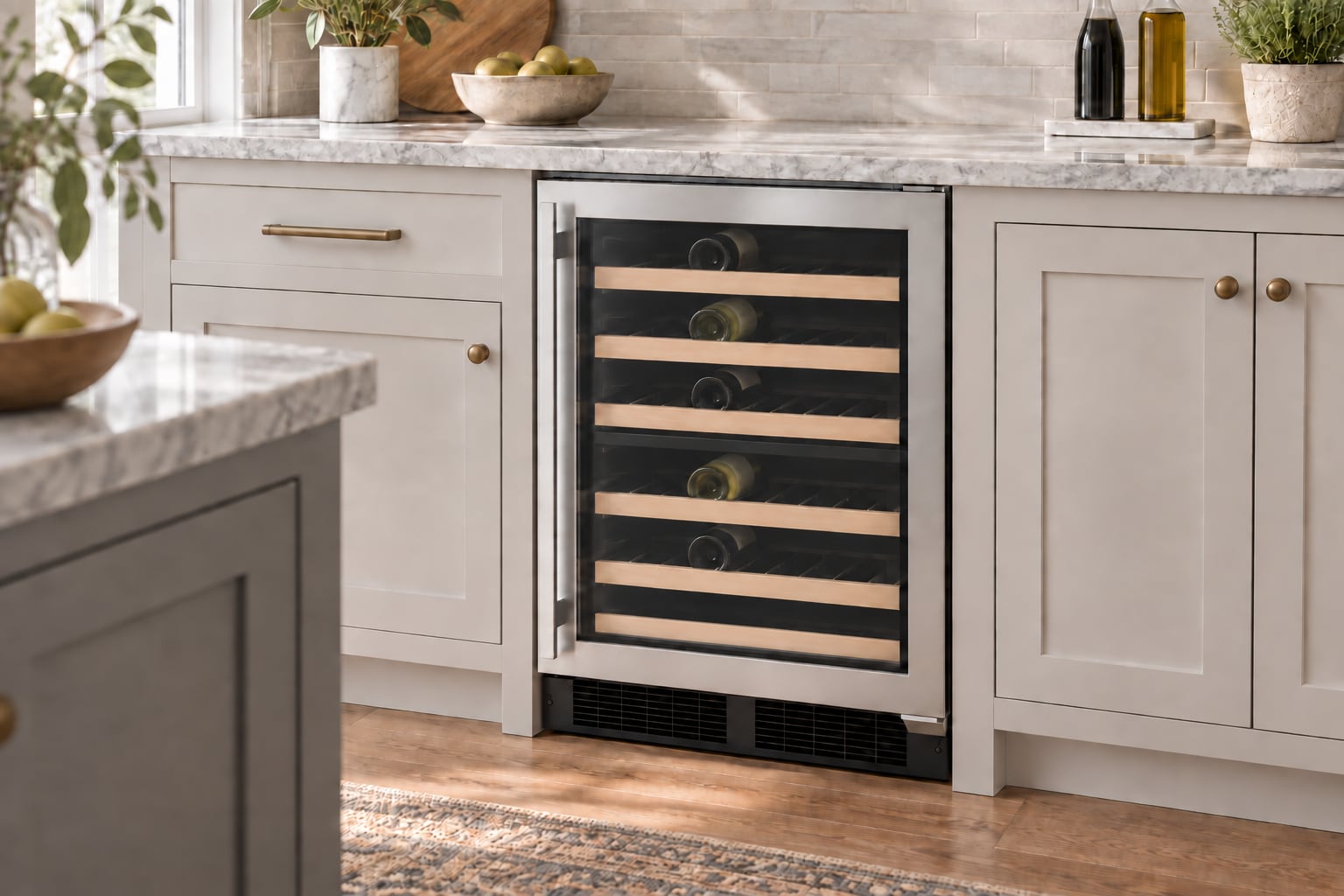
If you need controlled storage, discuss a suitable refrigerator or cellar plan alongside the rack. If the rack belongs in an established wine room, begin with its available space and equipment clearances. Naming the storage purpose prevents a decor decision from quietly becoming a promise that the location can support every bottle for any length of time.
Let the bottle mix set the storage brief
Count bottles by format and by how you buy them. Repeated wines may suit grouped storage; a collection of individual labels may benefit from easier identification. Include broad sparkling-wine bottles, tall shapes and larger formats. Decide which wines should be within easy reach and which can occupy less frequently used positions.
State a reasonable growth allowance as a plan rather than an exact prediction. If you often bring home cases, show where the next one would go. A rack that barely contains today's bottles may be appropriate for a limited serving selection but frustrating as the only storage for a growing collection. The same count can lead to different layouts for those two jobs.
Compare wall-mounted, floor and modular arrangements
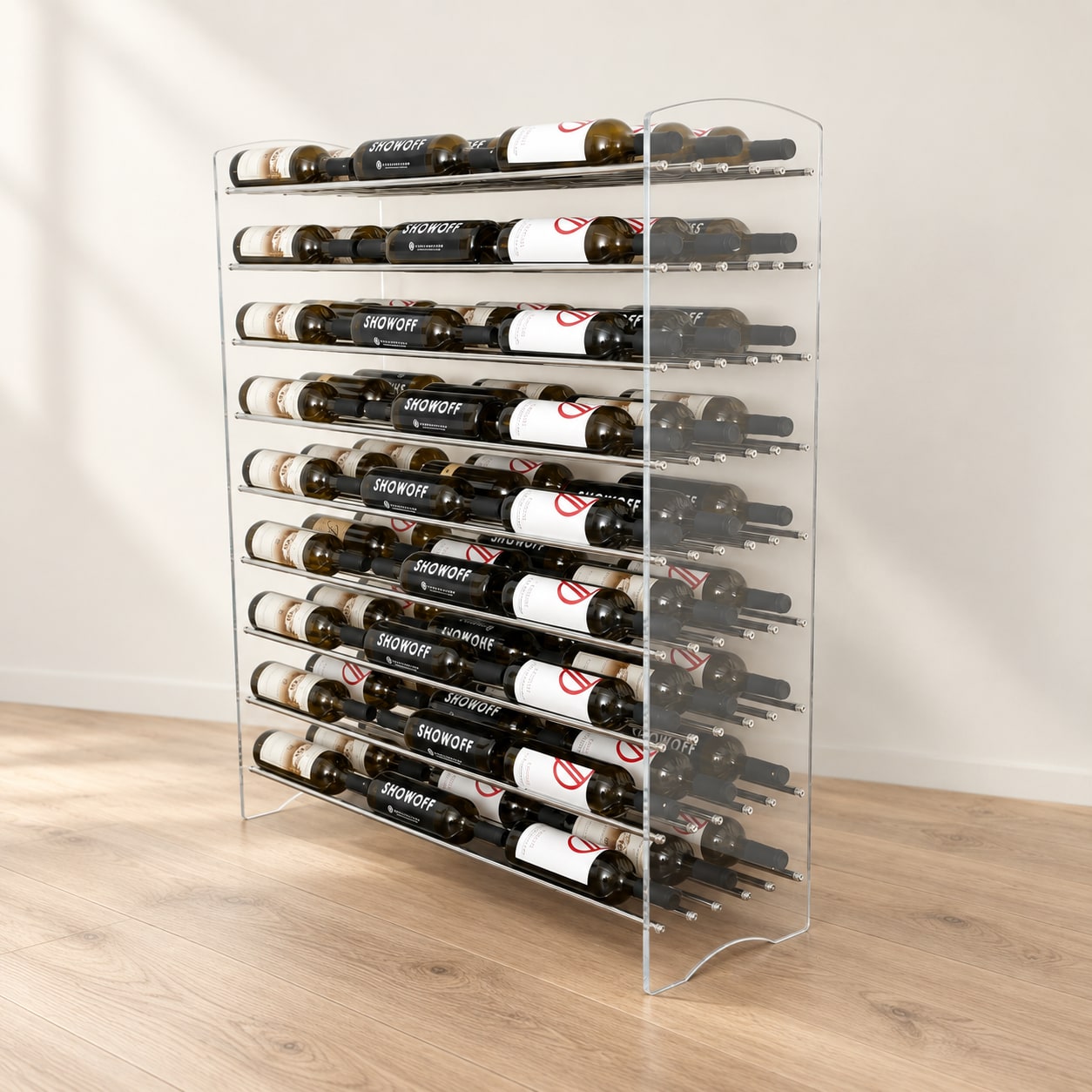
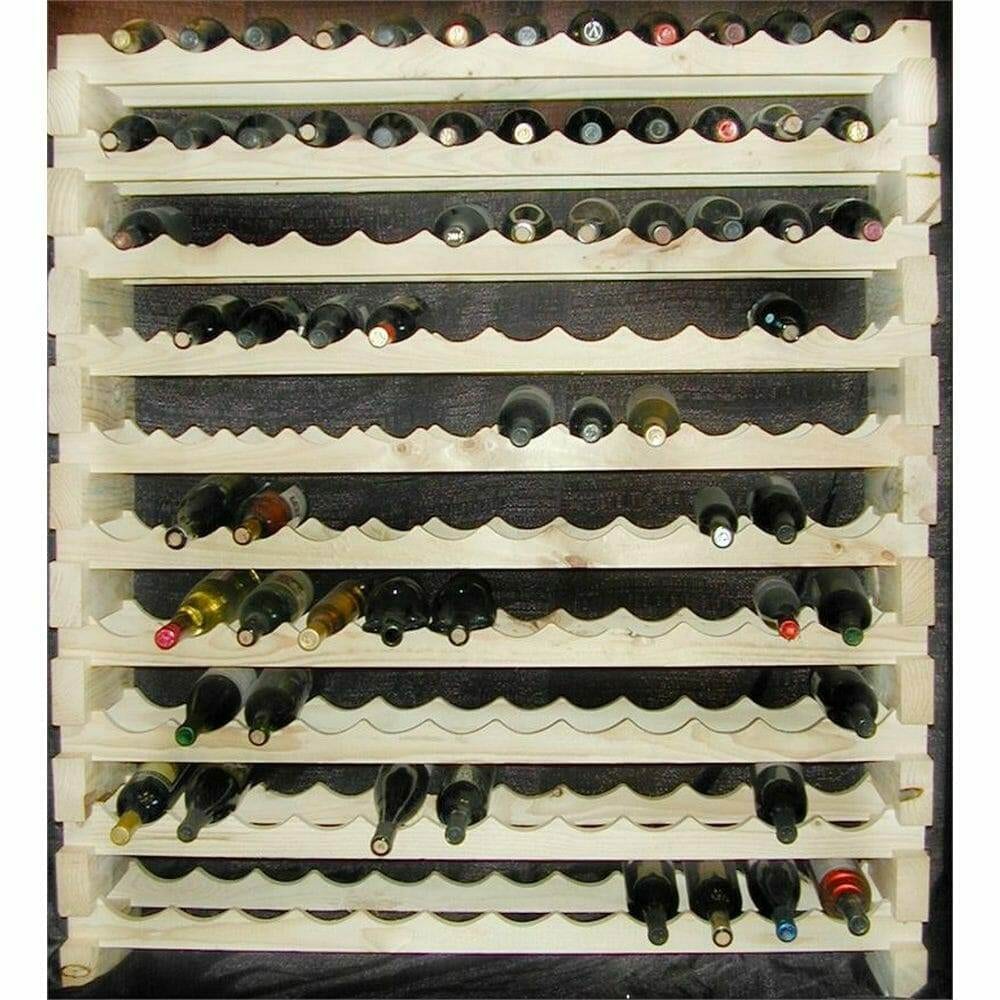
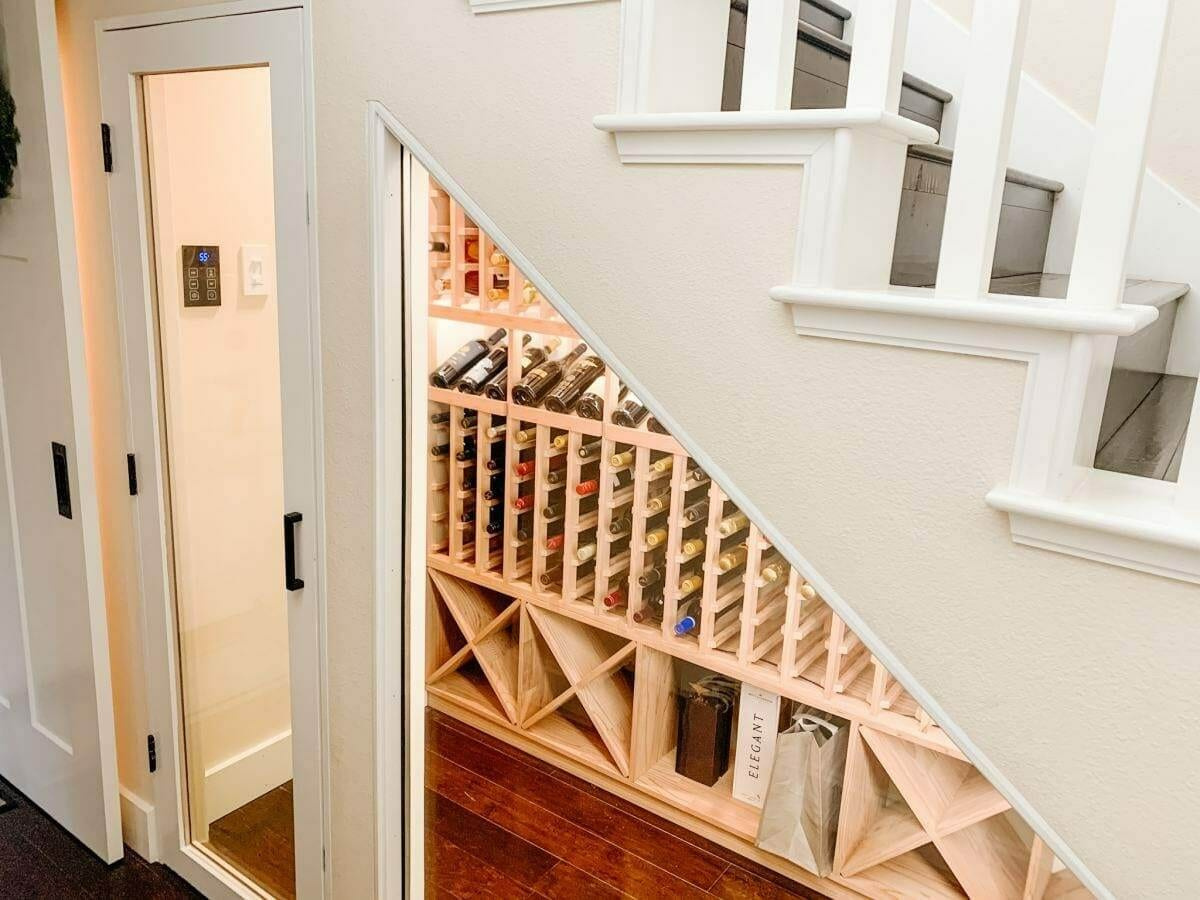
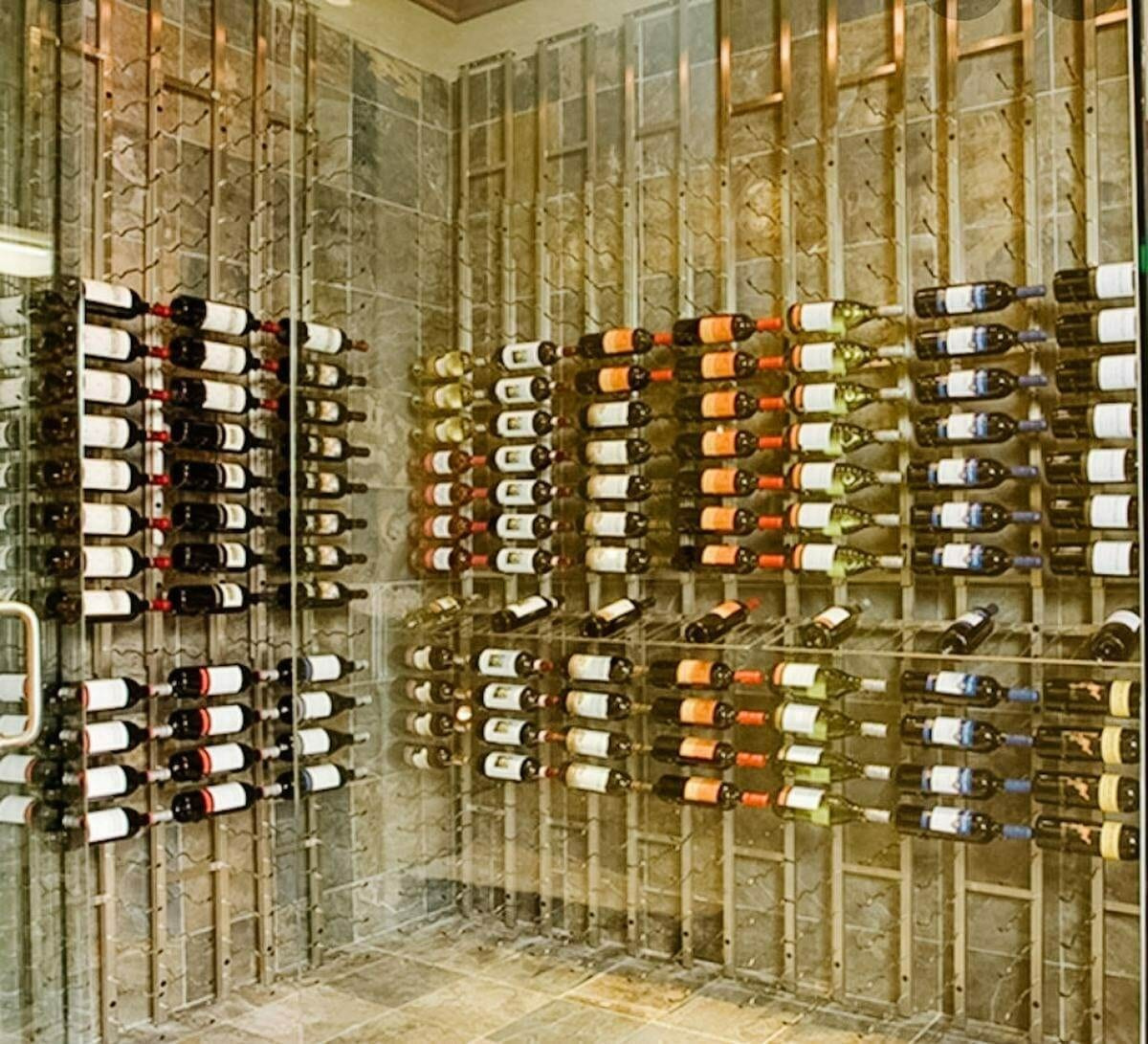
Wall-mounted racks can make a display part of the room's architecture, provided the wall and attachment suit the selected system. Floor arrangements have a different footprint and access pattern. Modular systems can create repeated storage sections, but their assembly and expansion must follow the particular product's instructions.
Wine Hardware carries VintageView, Modularack and designer rack kits. Compare specific models rather than treating the whole category as one design. Draw loaded bottles, walking space and door movement around each option. The arrangement that looks smallest when empty may project further into the room once wine is stored in it.
Choose material after the layout works
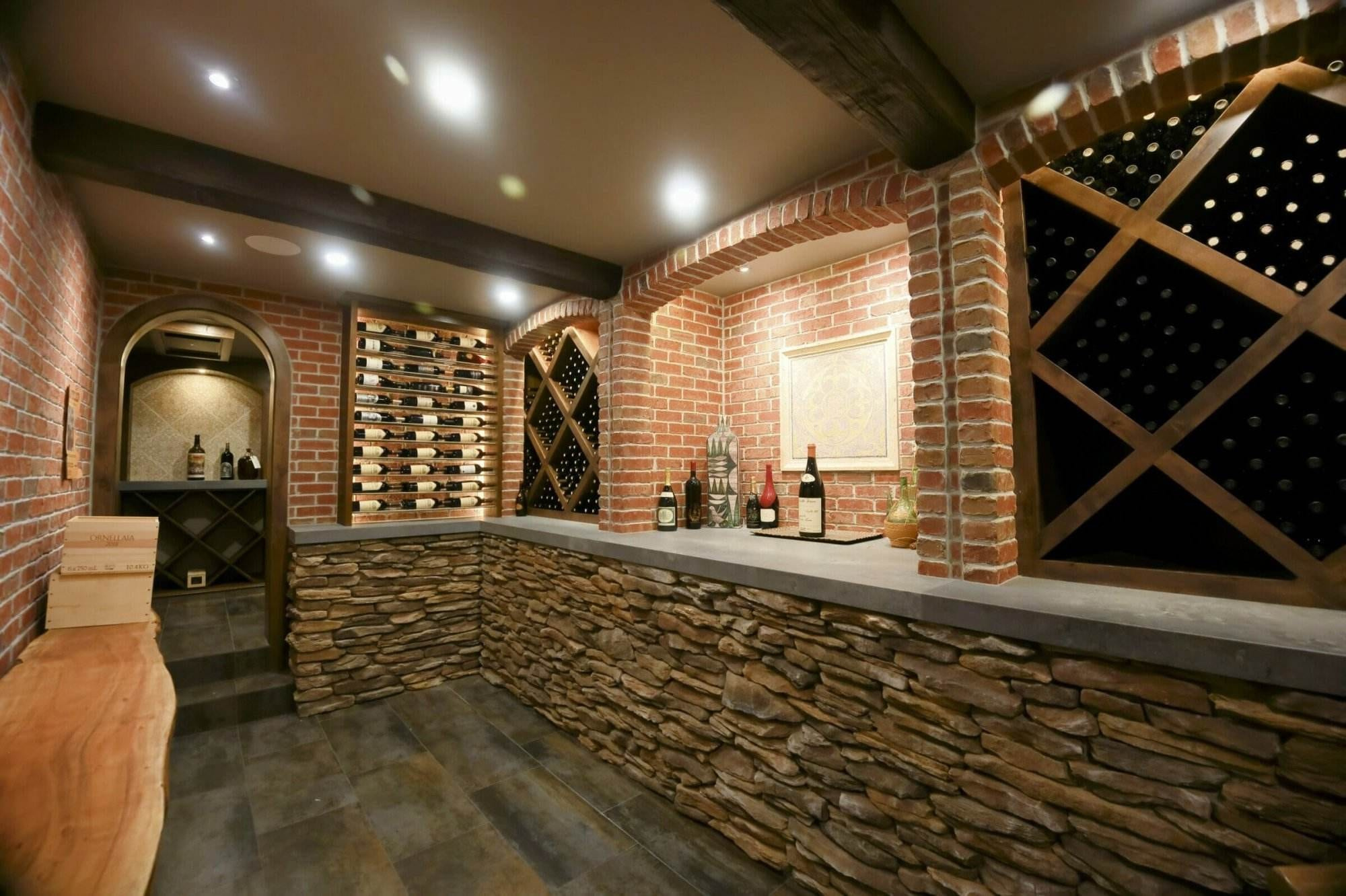
Wood and metal create different visual relationships with bottles and surrounding finishes. Compare a sample in the room's actual light and consider how much of the rack will remain visible when it is loaded. Ask about the selected finish and its care instructions rather than assuming every product made from the same material behaves alike.
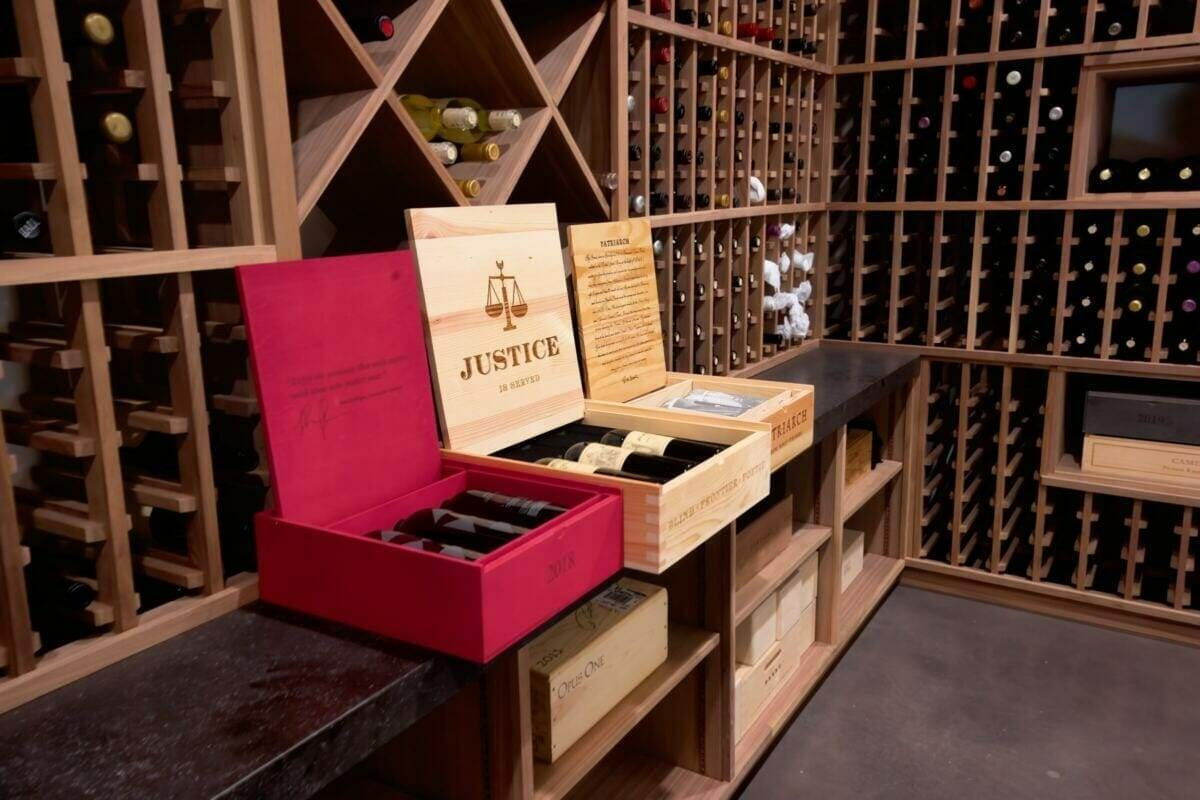
Use custom work to solve a specific need: an unusual shape, a mixed-format section or integration with cabinetry. If standard modules fit the room and collection, compare them first. A deliberate mix of simple storage and a focused display can give the room character without requiring every bottle position to be a custom feature.
Review the installed scope and future upkeep
Review what comes with the rack and what is required separately for the proposed installation. Confirm assembly, mounting, surface preparation and delivery responsibilities. Have the supporting construction reviewed where needed. Do not choose a fixing method only because it is convenient or because a different rack used it previously.
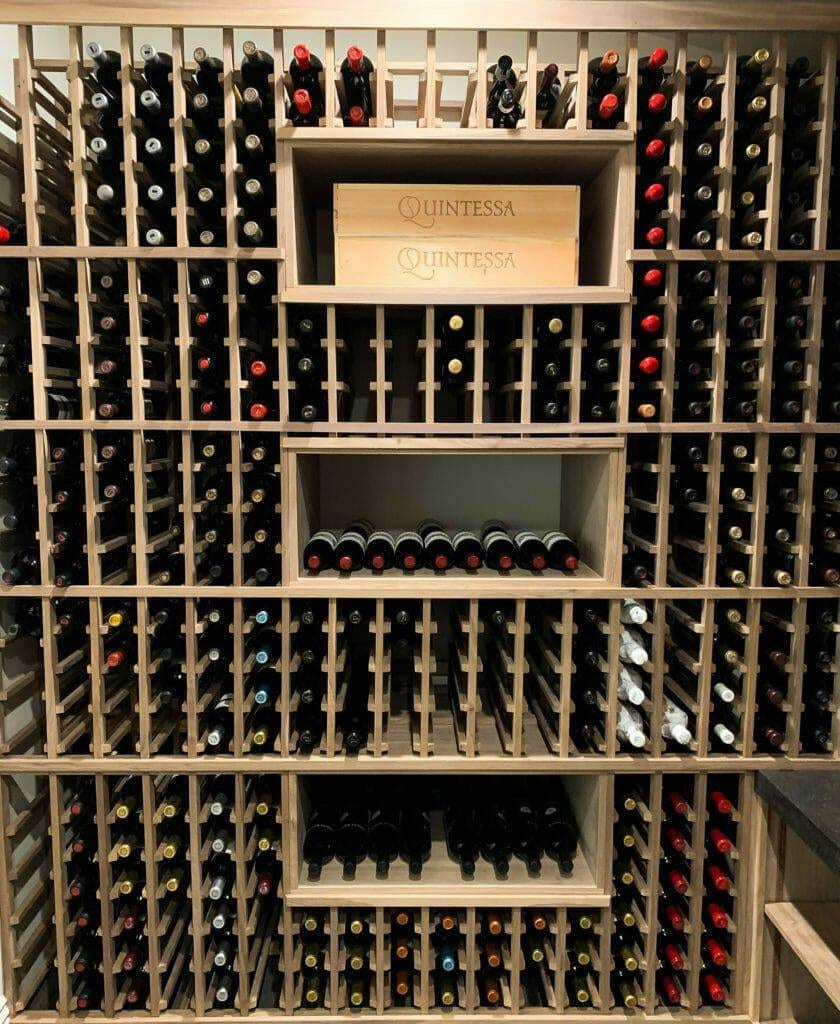
Consider cleaning and inspection access with bottles in place. Leave a place to set wine down while reorganizing and a way to identify rows or sections if the collection needs it. For large orders, ask about freight and receiving arrangements. A complete rack choice includes how it arrives, how it is installed and how you will use it afterward.
Make the final decision with a short checklist
Confirm that the chosen layout fits representative bottles, the loaded footprint suits the room and regular selections are reachable. Check that required equipment access remains clear and that any expansion is compatible with the selected system. Then compare the final finish and full installed scope against your budget.
Bring this information to our Walnut Creek showroom. Room photographs, measurements and a bottle list let us discuss useful options immediately. The final purchase should answer a concrete brief: where the wine will live, what the rack will hold and how the arrangement fits the way you enjoy your collection.
Questions before you decide
Is a wall-mounted rack better for a small room?
It may suit the layout, but check loaded bottle projection, circulation and the mounting surface. A wall display still occupies usable depth. Compare it with a floor or modular option using the same room sketch.
Do I need custom racks for a mixed collection?
Not always. Suitable kit components may accommodate the formats you own, or a custom section may resolve a particular need. Measure unusual bottles and compare them with the exact supports and openings before deciding.
What should I buy first for a new cellar?
Develop the room, cooling and rack plan together before placing major orders. Equipment clearances, enclosure details and bottle layout can affect one another. A coordinated plan helps avoid buying a rack that later obstructs the necessary installation.
Find the rack that fits your home with Wine Hardware. Call (925) 944-1084 or bring your collection plan to the Walnut Creek showroom.
Get Mike's help to compare standard and custom rack choices for your particular room. With your rack measurements in hand, visit the showroom in Walnut Creek, or call (925) 944-1084.